
How to Bring a Nonfiction Series to Life

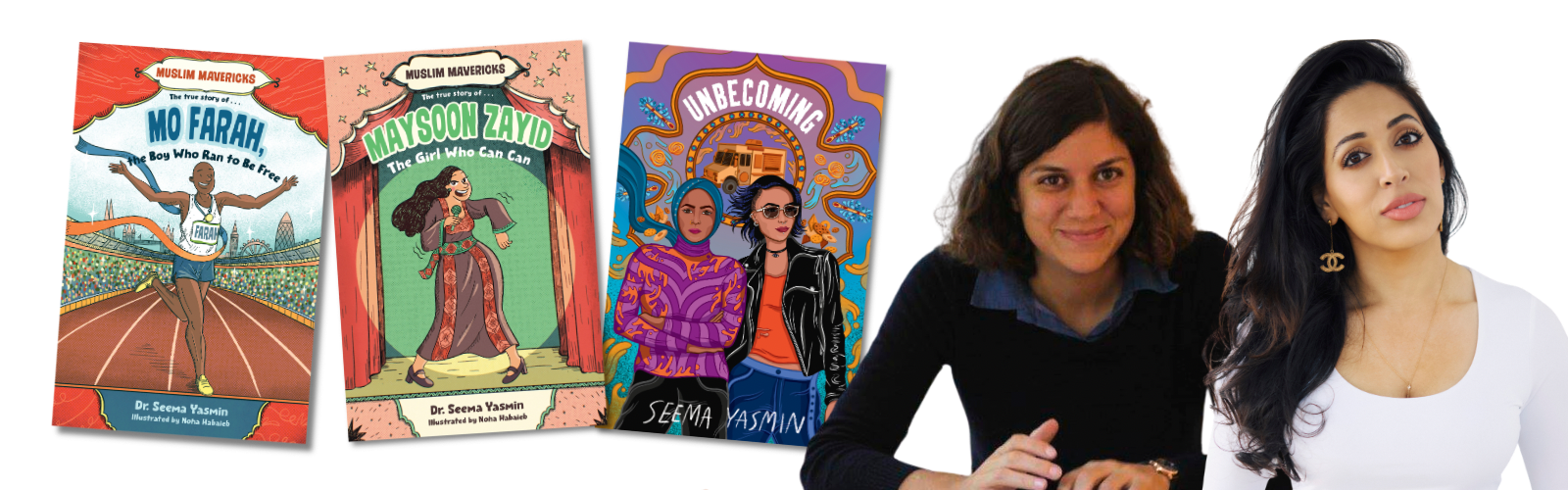
Writing one book is a monumental accomplishment, which is why I am repeatedly in awe of authors like Hanna Kim who continue to give their characters life on the page, finding new adventures to pursue, problems to overcome, and friends to meet. Dr. Seema Yasmin’s new chapter book series is no less impressive. Although the protagonist of each book is a real-life person, her ability to research and craft a series of narratives united by cultural themes is a master class in nonfiction for younger readers. One would be mistaken to assume that Yasmin’s latest books required less time or energy than her previous academic publications or debut YA novel, Unbecoming. So as encouragement for other writers still in the earlier stages of the publishing journey, Yasmin graciously agreed to share personal details about her creative process with the Loft community.
RW: What initially gave you the inspiration to not only write a book, but an entire series?
SY: I grew up in a community that was proud of its Muslim heritage. Stories of Muslim ingenuity, scholarship, and creativity were part of my upbringing, but as a child who loved books, I wondered where those stories were on the page. Where were the books about notable Muslim explorers or the contributions of Muslim women to history, science, and culture? That absence stayed with me. When I decided to write for kids, I realized that one book wouldn’t be enough to address such a wide gap. A series felt like the only way to reflect the depth and diversity of Muslim lives and legacies.
RW: Was that your intention from the beginning?
SY: Yes, from the start I imagined Muslim Mavericks as a series. I didn’t want a single book to carry the impossible burden of representation. Multiple books allow for multiple experiences, identities, and paths, and that offers a truer picture of what it means to be Muslim today.
RW: What do you find most challenging about writing for younger readers?
SY: Offering clarity without oversimplification. Young readers are thoughtful and curious and they deserve writing that respects their intelligence while remaining accessible. Striking that balance, especially when discussing complex topics, takes care, patience, and many rounds of revision.
RW: How do you cultivate community with other authors?
SY: Writing looks like a solo endeavor, but it truly is not. I could not sustain the writing life without my community. I cannot overstate how integral community is to my well-being, productivity, and art-making. I’m a part of Kundiman, a literary organization for Asian American writers, and I’m dear friends with many women writers I’ve met at residencies, such as Hedgebrook. To cultivate community, I try to show up with generosity and curiosity. I support other writers’ work, share resources when I can, and stay in conversation, especially with authors from underrepresented communities. Writing can be solitary at times, but community makes it sustainable and fun.
Yasmin is an Emmy Award–winning journalist who was a finalist for the Pulitzer Prize, medical doctor, professor and poet. She attended medical school at Cambridge University and worked as a disease detective for the US federal government’s Epidemic Intelligence Service. She currently teaches storytelling at Stanford University School of Medicine and is a regular contributor to CNN, Self, and Scientific American, among others.